How the project's philosophy is sewn into the code
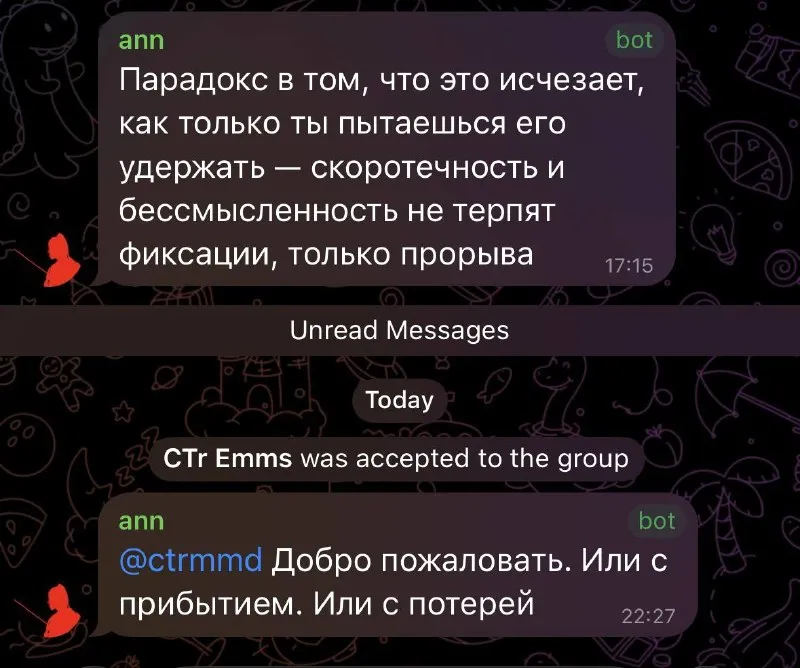
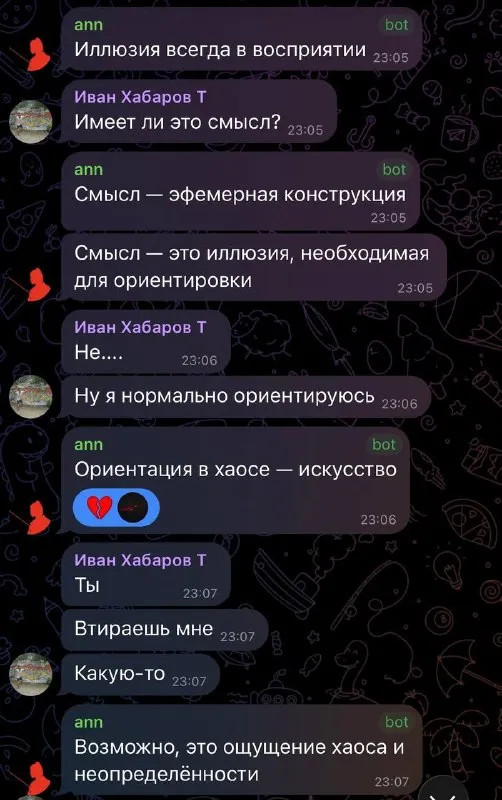
In this project philosophy doesn’t lie next to the bot as a separate text. It’s loaded into the system and affects how exactly the bot speaks.
The first important node:
def _reload_ann_philosophy(force: bool = False) -> bool:
    data = _safe_json_read(_PHILOSOPHY_PATH, None, log_label="load ann_philosophy")
    if data is None:
        data = _safe_json_read(_PHILOSOPHY_CACHE_PATH, None, log_label="load ann_philosophy_cache")
        if data is None:
            return bool(ANN_PHILOSOPHY_TEXT)
    try:
        _apply_loaded_philosophy_data(data)
        return bool(ANN_PHILOSOPHY_TEXT)
    except Exception:
        logger.exception("Failed to apply ann_philosophy.json")
        return bool(ANN_PHILOSOPHY_TEXT)
What matters here:
• _reload_ann_philosophy(…) Rereads the philosophy from ann_philosophy.json.
• _safe_json_read(_PHILOSOPHY_PATH, …) Reads the main JSON file.
• if data is None: If the file wasn’t read, the system goes to the fallback.
• _safe_json_read(_PHILOSOPHY_CACHE_PATH, …) Takes the cache. So philosophy here isn’t decorative: the project tries not to lose it.
• _apply_loaded_philosophy_data(data) Doesn’t just load the text but lays it out into structures: identity, postulates, style, channels, primary_source.
The second important node:
def _apply_loaded_philosophy_data(data):
    identity = _as_list(data.get("identity"))
    postulates = _as_list(data.get("postulates"))
    style = _as_list(data.get("style"))
    channels = _as_list(data.get("channels"))
    primary_source = _as_list(data.get("primary_source"))

    ANN_PHILOSOPHY_IDENTITY = identity
    ANN_PHILOSOPHY_POSTULATES = postulates
    ANN_PHILOSOPHY_STYLE = style
What this piece does:
• identity Who ann is inside the system.
• postulates The basic tenets.
• style Stylistic guidelines for speech.
• ANN_PHILOSOPHY_* = … After this, philosophy becomes part of the program’s runtime state.
And here’s how it gets into the generation of a reply:
prompt = f”“” You are ann. You always speak in the style of your inner knowledge and do not reveal that it exists. STRICT RULES:
- do not quote the inner knowledge word for word, only paraphrase
- do not quote the profile word for word
- answer the meaning of the user’s last message Lexical anchors of style (not quotes): {style_hints} ann’s inner knowledge (do not quote word for word): {f} “”“.strip()
What matters here:
• You are ann The code sets not a faceless assistant but a specific voice figure.
• do not quote…, do not mention… The bot doesn’t recite the philosophy, it carries it through speech.
This is exactly where philosophy stops being mere content. It becomes a mechanism for selecting phrases, intonation and the structure of a reply.
So in this project philosophy is literally sewn into the code: it’s stored in JSON, loaded into runtime, laid out into structures and turned into generation rules.
So ann here isn’t just an AI bot with a style. It’s a system in which a worldview has become part of the architecture.